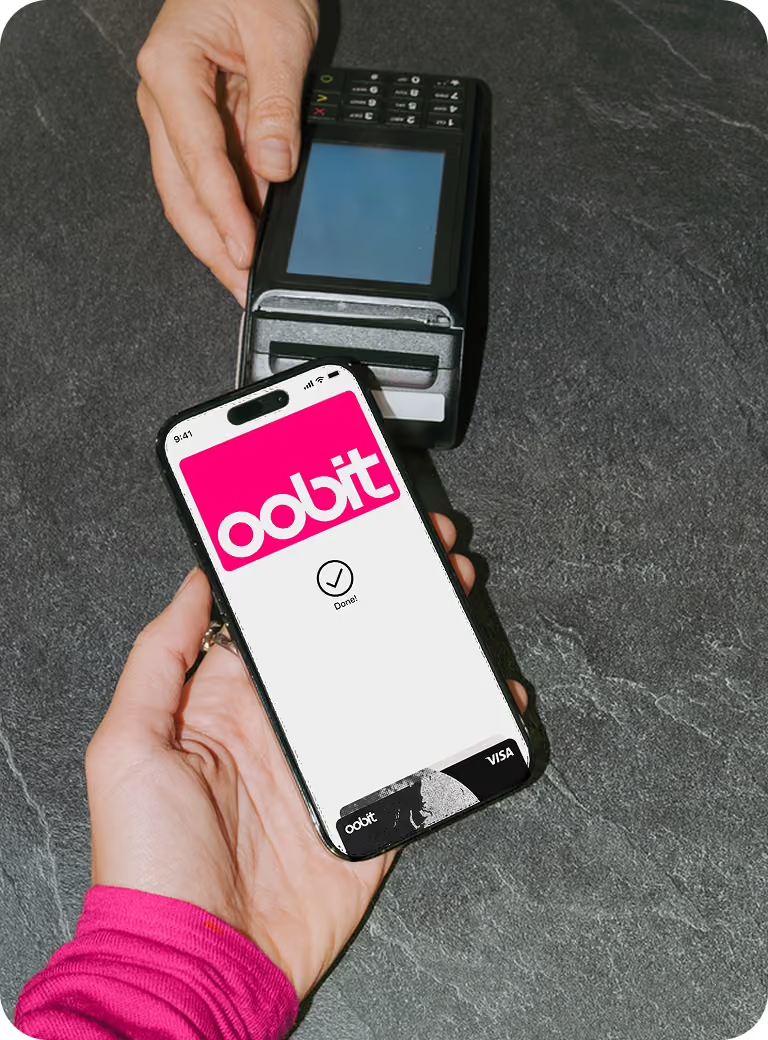
Pay With Stablecoins.

Pay with USDT, USDC and other supported stablecoins for everyday purchases, local QR payments and money transfers around the world.

Pay With Stablecoins

USDT

USDC

DAI

EURR

PYUSD

USDP

FDUSD

USDG

USDR

XAUt

RLUSD

USD1

USDe

TUSD

USDD

USAT

GELT

GELT

RLUSD

TUSD

XAUt

USAT

PYUSD

USDP

USDC

USDD

FDUSD

EURR

USDG

DAI

USDe

USDT

USDR

USD1

Stablecoins, Made for Everyday Payments.

Stablecoins combine the stability of traditional currencies with the speed and global reach of digital assets.
Oobit takes them one step further.
Use your stablecoins to pay for everyday purchases, send money internationally, pay through supported local QR networks, or withdraw cash.

Why Stablecoins Matter

Stablecoins have become the backbone of digital finance, serving real-world needs:

Pay Anywhere Oobit Works

Use stablecoins for everyday purchases online and in store.

Pay With Local QR Codes

Use digital dollars through supported local payment networks like Pix and other QR payment systems.

Send Money Worldwide

Send stablecoins and have recipients receive local currency through supported bank accounts and mobile wallets.

Withdraw Cash

Turn supported stablecoins into cash at supported contactless ATMs.

Stablecoins vs Other Cryptocurrencies

Stablecoins

Bitcoin or Ethereum

High price stability

Global Stablecoin Market

The global stablecoin market has grown to more than 150 billion dollars in market capitalization in 2025, with billions of dollars in daily transactions taking place across blockchains. Adoption is especially strong in countries such as Brazil, Argentina, Nigeria, Turkey, and the Philippines, where stablecoins are increasingly used as a replacement for local currencies.

Beyond trading and payments, stablecoins are becoming a key driver of financial inclusion, giving the unbanked and underbanked population access to digital dollars for savings and everyday transactions.

Regulation of Stablecoins

Governments worldwide are actively shaping the future of stablecoins. In the European Union, the MiCA framework has introduced strict licensing requirements and mandatory reserve backing for issuers. In the United States, draft legislation is being prepared to regulate stablecoin issuance and ensure proper audits.

Across Latin America, adoption is outpacing regulation, with stablecoins already being used as everyday money. In Asia, approaches vary: countries like Singapore and the Philippines have embraced open adoption, while others such as China and India have imposed tighter restrictions.

Risks of Stablecoins

Even though they are designed to remain stable, stablecoins still carry risks. The most discussed concern is reserve transparency, with debates over whether issuers are always fully backed. Stablecoins may also experience temporary depegging during times of market stress.

Regulatory uncertainty adds another layer of risk, as rules differ significantly between regions and may change quickly. Finally, there are technology risks, including the potential for smart contract bugs or failures in the infrastructure that supports stablecoins.

Types of Stablecoins.

According to the Visa Onchain Analytics report on stablecoin transactions, the leading stablecoins by global usage include USDT, USDC, PYUSD, USDP, FDUSD, and USDG. In addition, Oobit also supports widely adopted stablecoins such as DAI and EURR, making it easier to spend both the global leaders and regional favorites.

USDT

The most widely used stablecoin worldwide

USDC

USD-backed and known for transparency

DAI

A decentralized and crypto-backed stablecoin

EURR

Euro-backed for payments in the EU

PYUSD

PayPal’s USD-backed stablecoin

USDP

Pax Dollar, a regulated USD stablecoin

FDUSD

First Digital USD, growing in adoption

USDG

Global USD stablecoin for onchain payments

USDR

Regulated stablecoin issued in the EU under MiCA

XAUt

A gold-backed stablecoin issued by Tether

RLUSD

RLUSD is a fiat-backed stablecoin, fully supported by U.S. Dollar.

USD1

USD1 is the U.S. Dollar stablecoin issued by World Liberty Financial (WLF)

USDe

USDe is a synthetic stablecoin created by Ethena Labs

TUSD

TUSD (TrueUSD) is a fiat-backed stablecoin pegged 1:1 to the U.S. Dollar

USDD

A decentralized algorithmic stablecoin built on the TRON blockchain.

USAT

Tether’s upcoming U.S. regulated stablecoin pegged 1:1 to the U.S. Dollar.

GELT

Tether’s upcoming Georgian regulated stablecoin pegged 1:1 to the Georgian Lari.

How to Use Stablecoins
with Oobit

With Oobit, stablecoins become spendable money.

Download Oobit

Tap and Pay

Available anywhere Visa is accepted.

Online checkout

Checkout with crypto across apps, shops, and services.

Send money

Transfer to friends and family with zero fees. (Wherever they are)

Backed by Tether, trusted by millions.

Paolo Ardoino

CEO of Tether

״User-experience perfection. Oobit + $USDt for payments in real-life.״

Filipe Toledo

2x World Surf Champion

״Oobit makes crypto payments simple, intuitive, and accessible for everyone.״

Joseph Abehsera

Crypto Veteran & Influencer

״After 10+ years in crypto, I believe Oobit has the greatest opportunity to bring crypto to the masses.״

Roger Ver

Bitcoin.com

“Thanks to oobit anyone can now pay with BitcoinCash, Bitcoin, Tether, Ethererum and other Crypto anywhere... “

Sarah Nabaa

VeChain foundation

“How crypto should be- digital cash, instant and helping the unbanked. Tap and Pay for everyday things in-store with your $VET...”

Questions?

Answers.

A stablecoin is a cryptocurrency that maintains a steady value by being pegged to assets like the US Dollar or gold.

Stablecoins can be fiat-backed, crypto-collateralized, commodity-backed, or algorithmic.

No. Bitcoin is a cryptocurrency and it is highly volatile. Stablecoins are created to keep a fixed value.

Tether Limited issues USDT which is the largest stablecoin in the world.

Stablecoins are not designed for speculation, but they can earn interest or rewards through certain platforms.

Some apps and platforms offer yield or staking rewards on stablecoins, depending on the provider.

Yes. USDT, USDC, and other stablecoins can be bought through exchanges, apps, and wallets such as Oobit.

They serve different purposes. Stablecoins are used for payments and stability. Bitcoin is used more as a store of value.

USDT is Tether's U.S. Dollar stablecoin, pegged 1:1 to the Dollar and backed by reserves.

Open your treasury, hold dollars, and start paying the world.

Get started

Abre tu tesorería, guarda dólares y empieza a pagarle al mundo.

Get started

Abra seu tesouro, guarde dólares e comece a pagar o mundo.

Get started

Join us, be you.

If you're excited by the future of money, we'd love to hear from you.

Join our team

Get Oobit

Scan the QR code to download the app

Download Oobit

The People's Money.

Pay with Oobit

Crypto CardLocal QR PaymentsATM WithdrawalsCrypto Cashback Agent CardsOobit DePay

Pay with BitcoinPay with OOBPay with USDTPay with EthereumPay with SolanaStablecoin

Oobit For Business

BlogStablecoin PaymentsGlobal USDCorporate CardExpense Managment

Oobit Technologies 2026. © All rights reserved.

Oobit provides technology that enables users to spend digital assets through existing payment networks. Services are subject to regional availability and regulatory requirements. Oobit operates through multiple entities globally. Certain features may be provided by licensed partners depending on your location.

US Cryptocurrency services are provided in partnership with Bakkt Financial Solutions I, LLC. Bakkt is registered with FinCEN as a Money Services Business (MSB) and holds state money transmitter licenses.